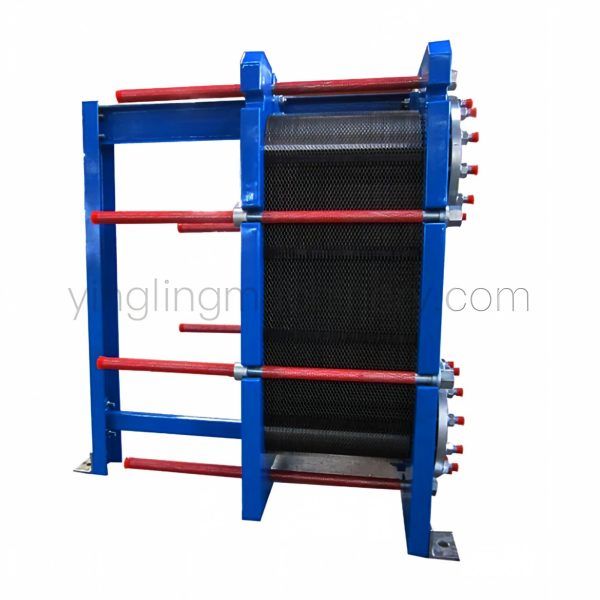
Corrosion Resistant Plate Heat Exchanger
Premium Corrosion Resistant Plate Heat Exchangers for Harsh Industrial Environments
In demanding industrial processing, aggressive fluids such as strong acids, chlorides, brackish water, and organic solvents can quickly degrade standard thermal equipment. Engineered specifically to tackle extreme chemical environments, our high-performance corrosion resistant plate heat exchanger lineup delivers optimal thermal efficiency, zero leakage reliability, and extended service life.
Whether you are handling highly corrosive pickling liquors, seawater cooling, or specialty chemical synthesis, our advanced gasketed plate and frame heat exchanger solutions ensure continuous operation, drastically reduced downtime, and maximum total cost of ownership (TCO) savings.
Why Choose Our Corrosion Resistant Plate Heat Exchangers?
Industrial heat transfer requires a precision balance between thermal performance and metallurgical resilience. Our plate heat exchangers are built from the ground up to solve severe corrosion and scaling challenges:
Advanced Metallurgical Plate Materials: To combat uniform, pitting, and crevice corrosion, we offer an extensive selection of exotic alloys tailored to your specific fluid chemistry:
Titanium & Titanium-Palladium (Gr. 1, Gr. 7, Gr. 11): Outstanding resistance to chlorides, seawater, hypochlorites, and nitric acid.
Hastelloy® C-276 / C-2000: Superior defense against concentrated sulfuric acid, hydrochloric acid, and wet chlorine gas.
254 SMO & Super Duplex Stainless Steels: Cost-effective alternatives for high-chloride process streams and brackish water.
Nickel Alloys & Tantalum Coatings: Ultimate solutions for ultra-aggressive media and elevated temperature applications.
Superior Elastomer Gasket Technology: Leak prevention is critical when handling hazardous media. Our gasketed plate heat exchangers feature clip-on or glue-free sealing systems in NBR, EPDM, Viton/FKM, and PTFE-encapsulated compounds, engineered to resist chemical swell and thermal degradation.
High Thermal Efficiency & Compact Footprint: The corrugated plate design induces intense micro-turbulence, delivering heat transfer coefficients up to 3 to 5 times higher than traditional shell-and-tube heat exchangers—while taking up less than one-third of the floor space.
Flexible Expansion & Fast Maintenance: The openable frame design allows maintenance engineers to easily inspect plates, replace gaskets, clean deposits, or adjust plate counts to accommodate evolving process flow rates.
Technical Specifications & Metallurgy Matrix
| Plate Material Options | Primary Resistance Profile | Ideal Industrial Applications |
| Titanium (Ti Gr. 1 / Gr. 11) | Chlorides, Seawater, Chlorine Bleach, Organic Acids | Marine Cooling, Desalination, Chlor-Alkali |
| Hastelloy® C-276 | Sulfuric, Hydrochloric, & Phosphoric Acids, Wet Chlorine | Chemical Processing, Petrochemical Refining |
| 254 SMO Super Austenitic | Pitting & Crevice Corrosion in High-Chloride Media | Flue Gas Desulfurization (FGD), Paper & Pulp |
| AISI 316L / 904L | Mild Organic Acids, Deionized Water, Alkaline Solutions | Food & Beverage, Sanitary Chemical Lines |
Target Industrial Applications
Our versatile gasketed plate and frame heat exchanger units are trusted by plant managers and process engineering teams across key global industries:
Chemical & Petrochemical Processing: Heating, cooling, and condensing aggressive acid solutions, aromatic solvents, and harsh catalysts.
Marine & Offshore Facilities: Central cooling systems utilizing raw seawater, ballast water treatment, and jacket water cooling.
Surface Treatment & Pickling: Temperature regulation of hydrofluoric acid, sulfuric acid baths, and electroplating solution heat exchange.
Pharmaceutical & Fine Chemicals: Precise batch temperature control under rigorous purity and non-contamination standards.
Mining & Hydrometallurgy: Slurry heat recovery and electrolyte heating in copper, nickel, and gold refining loops.
Engineered Quality & Thermal Sizing Support
Selecting the right heat exchanger requires precise thermodynamic calculations and material compatibility checks. Operating conditions like fluid concentration, velocity, pressure drops, and thermal conductivity dictate the ideal plate geometry and channel design.
Our technical team utilizes proprietary thermal calculation software to custom-size every corrosion resistant plate heat exchanger. Every unit undergoes rigorous hydrostatic testing, dye-penetrant testing, and quality assurance under ISO 9001 and ASME Section VIII standards prior to delivery.
Request a Custom Thermal Calculation & Quote Today
Looking to upgrade your existing heat transfer system or design a new anti-corrosive process loop? Partner with our application engineers to receive an optimized thermodynamic specification and competitive factory-direct proposal within 24 hours.
Contact Our Engineering Team Today to Discuss Your Process Requirements!